

This article contains AI-assisted content and has been reviewed and published by a human editor.
What happened (quick summary)
Apple announced a new unified business platform called Apple Business, which becomes available on April 14, 2026, and confirmed that paid placements will appear inside Apple Maps as soon as this summer — initially available to businesses in the United States and Canada. For advertisers, the immediate implication is a brand-new, high-intent local ad surface that sits alongside Google Maps and other local channels; preparing your listings and measurement now will deliver a first-mover advantage. Apple’s announcement explains the platform launch and product scope.
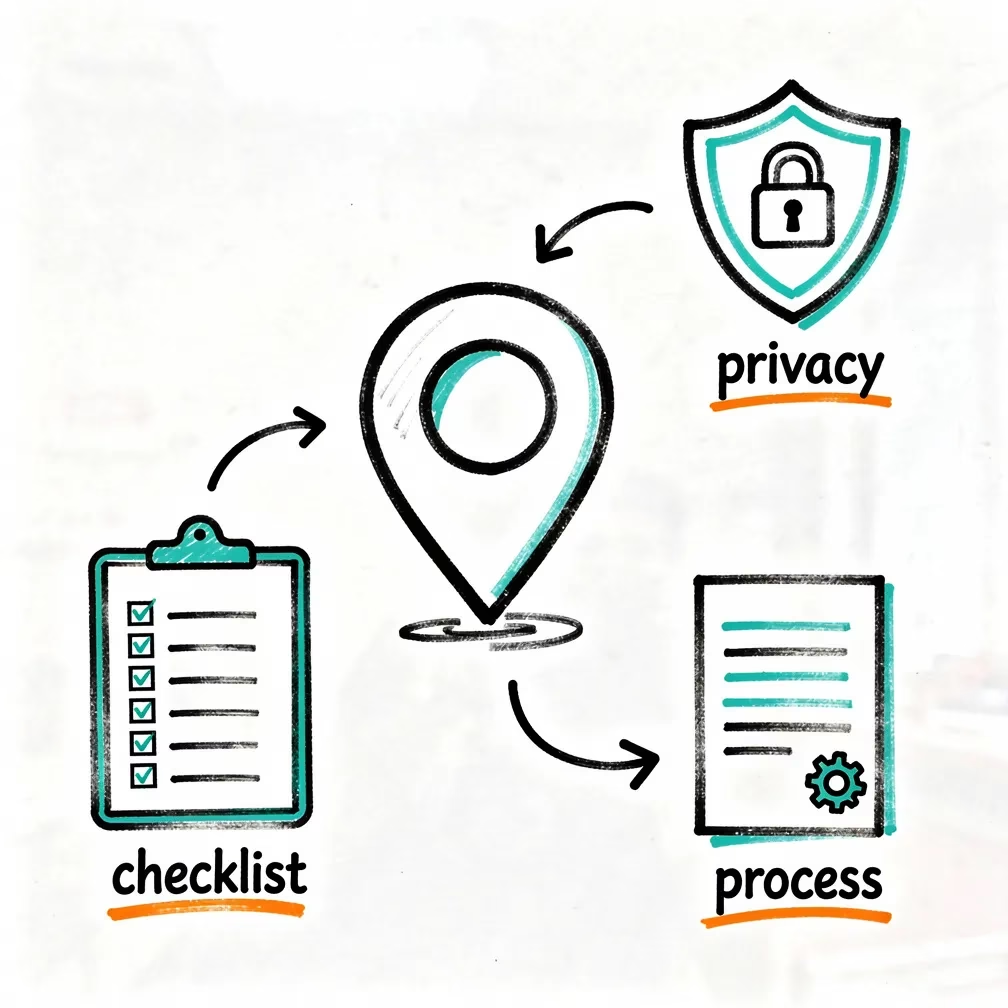
Why this matters for marketers
Searches inside mapping apps are inherently high intent — users are often ready to visit, call, or buy. Apple Maps ads will show at the top of search results and within a new Suggested Places surface, which creates both search-triggered and discovery-style local inventory. Early entrants can access lower-competition auctions and gather conversion data before broader market saturation. Search Engine Land’s coverage describes placement, auction basics, and the timeline in detail.
Key differences vs. other local ad channels
Apple’s approach is explicitly privacy-first: targeting will rely on contextual query signals and approximate device location rather than durable user profiles, and Apple says Maps interactions are not tied to the user’s Apple Account. That changes how you should think about audience building, measurement, and creative personalization — expect fewer long-lived identifiers and more reliance on first-party conversions and in-store signals. For a concise technical readout and commentary on the Maps ad product and privacy design, see PPC Land’s summary of Apple Business and Maps ads. PPC Land covers privacy details and the Maps ad flow.
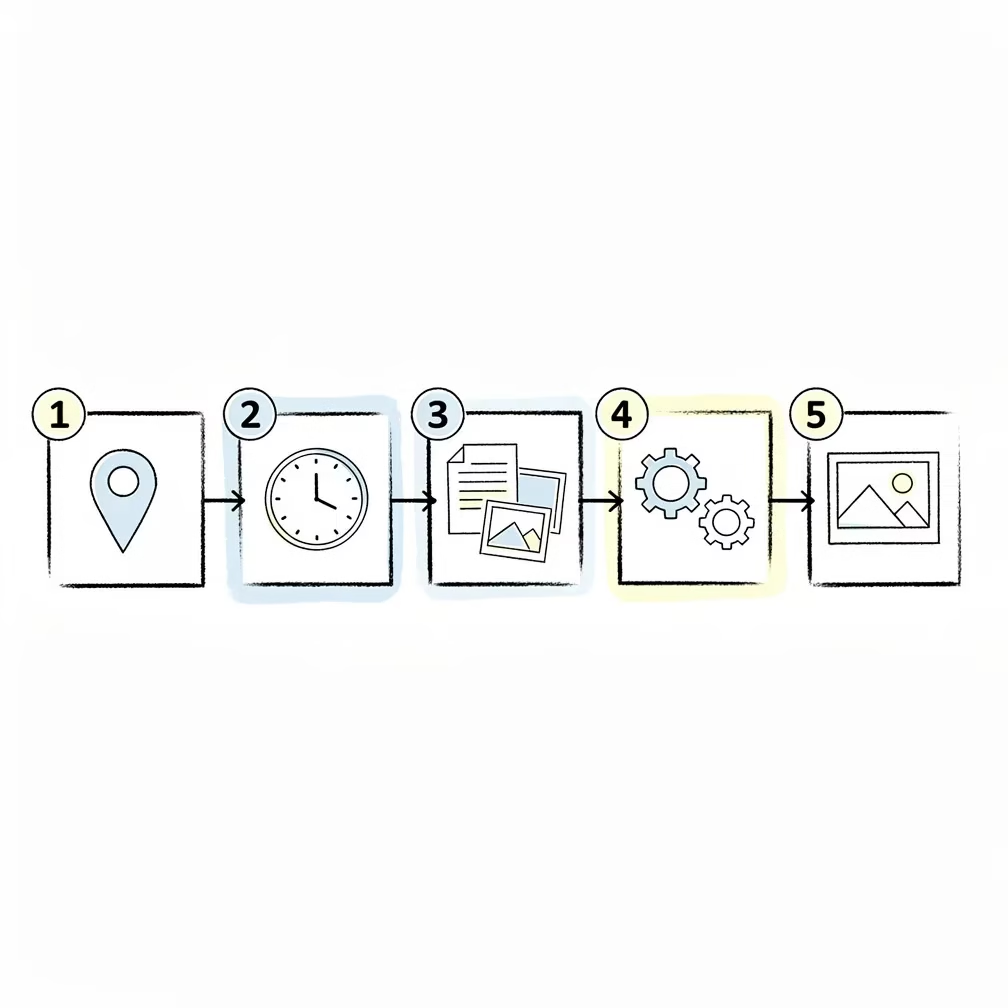
Immediate 10-point checklist (start this week)
Below are prioritized actions with owners and suggested deadlines. Each item is practical and narrowly scoped so teams can execute before Apple opens auctions this summer.
| Action | Owner | Deadline |
|---|---|---|
| Claim and verify every business location in Apple Business | Local listings / Ops | Before April 14, 2026 |
| Audit and standardize place-card metadata (hours, categories, photos, booking/order links) | Local SEO / Creative | 7 days |
| Map expected attribution gaps and define proxy KPIs (store visits, calls, reservation clicks) | Analytics / Strategy | 14 days |
| Prepare server-side conversion ingestion and offline import flows | Engineering / Data | 30 days |
| Create concise assets for place cards (2–3 headline variations, three photos optimized for mobile) | Creative | 10 days |
Search Engine Land and several industry roundups flagged claiming and optimizing listings as the most immediate step because Apple requires businesses to be present in Apple Business before buying Maps placements. Industry digests emphasize listing hygiene as the gating factor for ad readiness.
Measurement and bidding: what to change
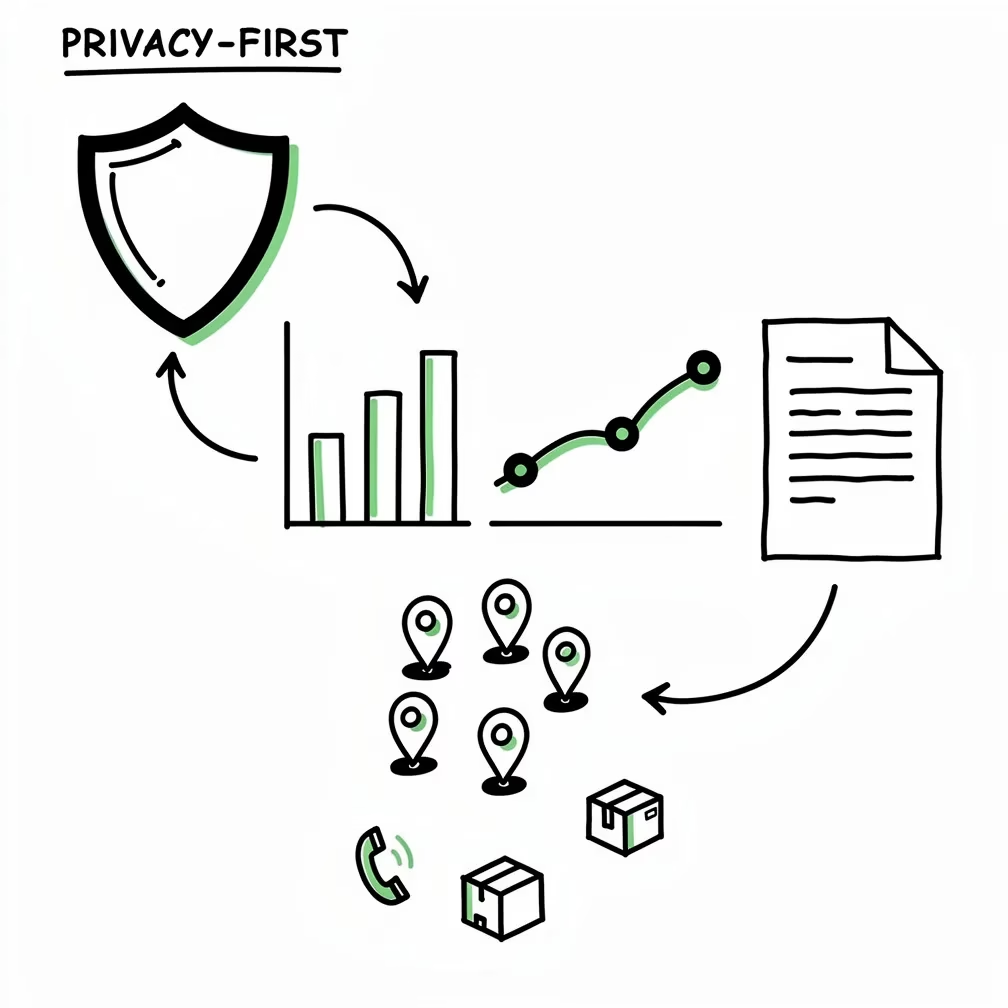
Expect weaker deterministic cross-device signals and shorter-lived measurement identifiers; plan to lean on aggregated conversion windows, enhanced server-side event uploads, and local signal imports (POS, reservations, calls). Revisit attribution windows and treat early Apple Maps performance as a complementary channel to Google local ads rather than a one-for-one replacement. Several local marketing blogs and SEO roundups already recommend aligning measurement KPIs and preparing offline data ingestion now. Industry guidance notes timeline expectations and measurement trade-offs.
Creative and bidding tactics to test first
Start simple: 1) prioritize clear CTAs (call/reserve/directions), 2) test imagery that signals product availability (menu, in-stock badge), and 3) use short, location-specific copy variants. Because targeting is contextual and location-proximate, run geographically narrow bids initially (radius or zip-level) and use time-of-day adjustments for peak footfall windows. Early experiments should prioritize conversion lift and unit economics over scale to learn the auction dynamics with minimal spend.
Final recommendations and next steps
Claim and normalize your Apple Business listings before April 14, instrument server-side ingestion for offline conversions, and build a 4–6 week pilot plan for summer launch testing. Document expected privacy-driven measurement blind spots and set up proxies (phone call tracking, reservation completions, POS match rates). Apple’s official newsroom piece and publisher coverage are the canonical references to track as the product rolls out; bookmark Apple’s announcement for product details and the Search Engine Land narrative for auction and placement specifics. Apple Newsroom and Search Engine Land are good places to monitor changes.
