

This article contains AI-assisted content and has been reviewed and published by a human editor.
What happened (and why marketers should care)
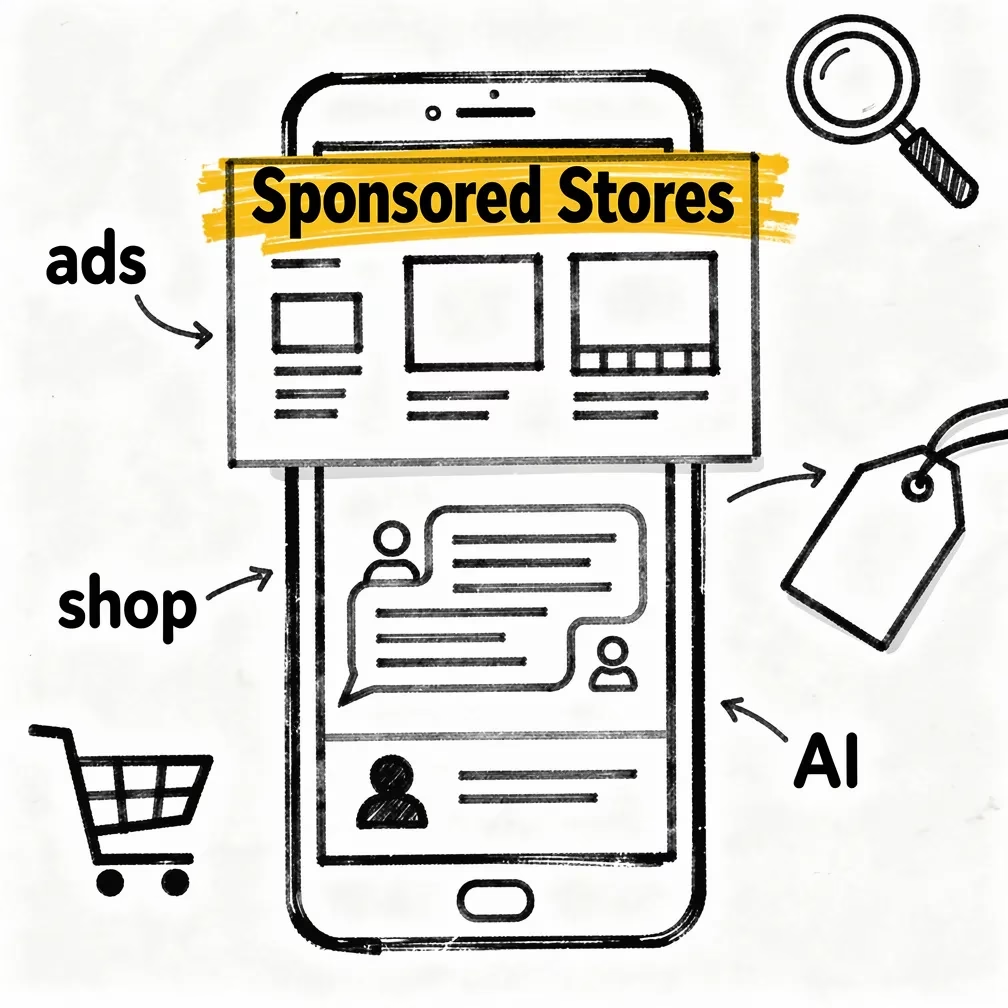
Late last week marketers spotted a new commercial behavior inside Google’s conversational search surface: a labelled “sponsored stores” entry appearing inside the product detail panel of AI Mode, plus a separate “Quick results from the web” block that surfaced organic retailer links ahead of the synthesised AI answer. The observation was documented by search analyst Glenn Gabe and summarized in coverage by PPC Land; Google has not publicly announced the change.
Where this sits in the shopping journey
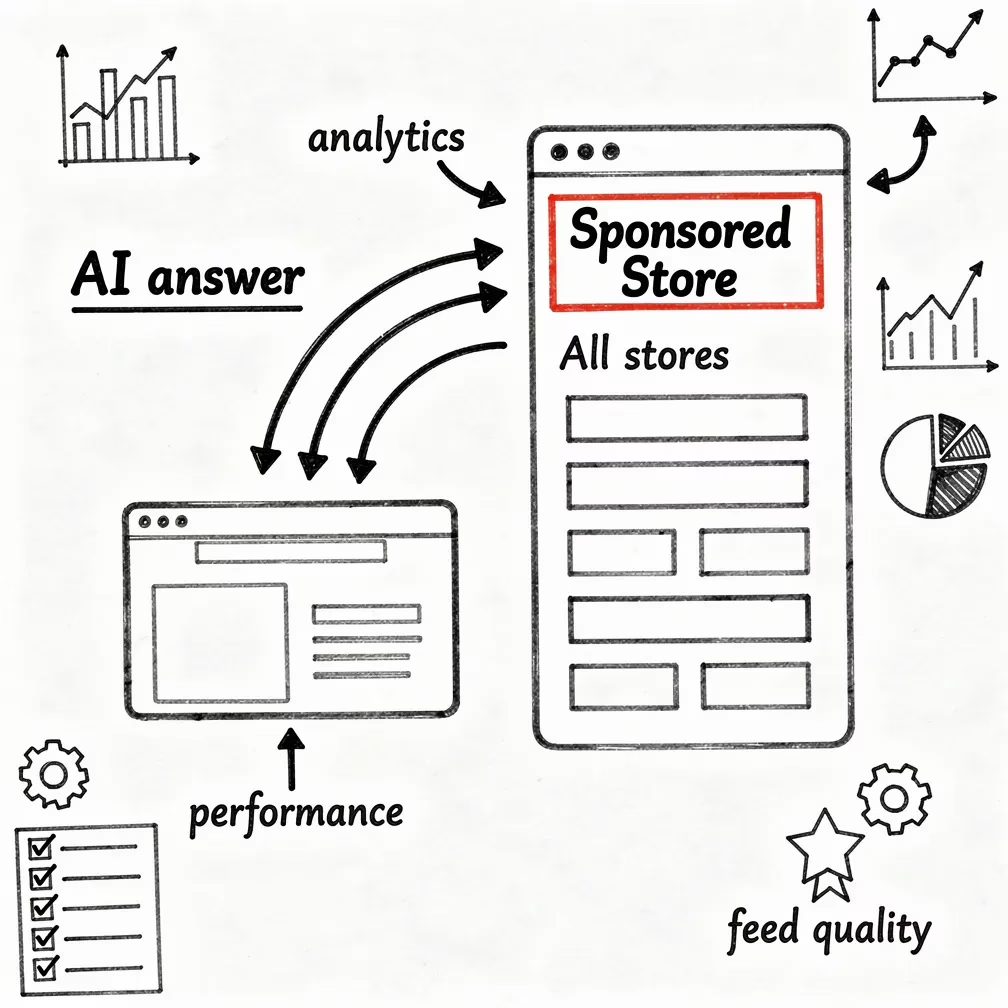
The key technical detail: the sponsored stores placement appears in the product detail sidebar after a user expands a product inside AI Mode, and it sits above the organic “All stores” merchant list — effectively creating a paid-first merchant slot at a point of high purchase intent. That distinction matters because the unit triggers at a post-click, deeper-funnel moment rather than in the initial conversational answer. PPC Land documented the screenshots and flow captured on March 25, 2026, and Search Engine Roundtable noted the same test in its March 26 forum recap.
Immediate marketing implications
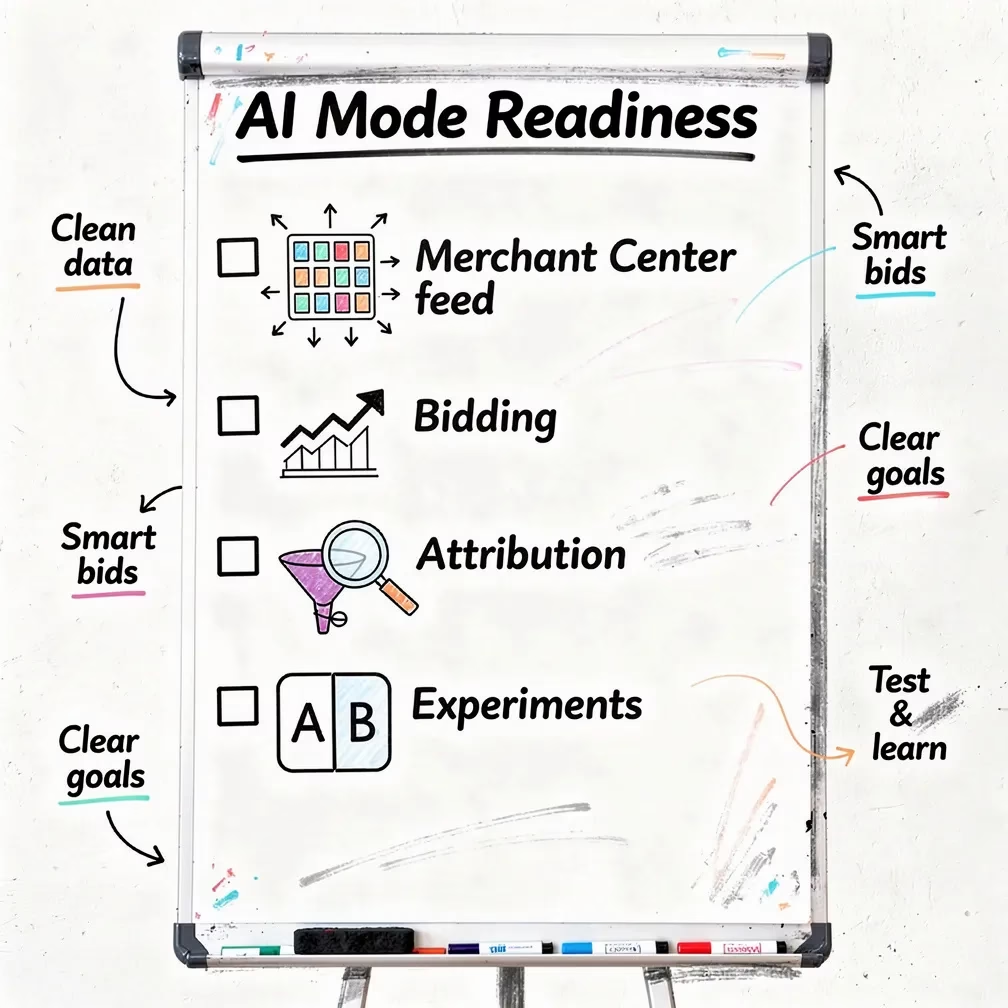
Four near-term actions advertisers must consider: 1) treat AI Mode product panels as a distinct placement that can capture high-intent traffic; 2) prioritize feed accuracy and freshness in Google Merchant Center because these product panels are powered by Google’s Shopping Graph; 3) test whether existing Shopping, Performance Max, or Direct Offers formats are eligible for the placement or whether new configurations are required; and 4) update attribution and reporting to capture traffic that may now bypass traditional SERP clicks via the new ‘Quick results’ shortcuts. PPC Land’s analysis highlights the Shopping Graph dependency and the risk to merchants with poor data feeds.
What this means for campaign structure and budgets
Because the placement appears at a later stage in the user flow, bidding strategies that assume early-funnel touchpoints will under-index for this surface. Brands should: (a) evaluate increasing bids for shopping/product feed-driven campaigns where margin permits; (b) validate whether Performance Max or standard Shopping campaigns already compete for the placement; and (c) run small, targeted experiments to measure incremental sales and CPA specifically from AI Mode product panel placements. Industry recaps suggest Google has been iterating rapidly on AI ad surfaces since late 2024, so marketers should assume tests may expand quickly. audit Merchant Center feeds for pricing, availability, shipping and loyalty annotation readiness; 2) run low-risk experiments allocating a modest portion of shopping budget to test incremental visibility in AI surfaces; 3) instrument server-side events or first-party measurement to capture AI Mode referrals; 4) brief creative and comms teams on how sponsored store placements may display price and loyalty details—you may need programmatic assets that surface member pricing or Direct Offers; and 5) watch for Google documentation or API updates that formalize access to the placement. PPC Land and Search Engine Roundtable provide the initial test evidence and the timeline marketers should monitor for formal announcements.
Who called this out — and how the industry reacted
Search analyst Glenn Gabe documented the screenshots and posted them on X on March 25, 2026; his post showed the sponsored stores entry and the quick links for a Gap query, which triggered broader discussion among search professionals. You can see the discussion led by Glenn Gabe on X, who noted the placement sits inside the product panel and appears above organic merchant listings, and by other search outlets who framed it as the next step in monetizing conversational search. PPC Land’s write-up collates the screenshots and context for advertisers.
Bottom line for marketers
Google’s test of sponsored stores inside AI Mode is a concrete example of how AI-driven interfaces are shifting where ad inventory surfaces and how commerce moments are monetized. For marketers the change is operational, not theoretical: clean product data, updated attribution, and targeted bidding experiments will determine who captures early advantage. Keep monitoring Search Engine Roundtable and PPC Land for new evidence and Google’s own product notices, and treat AI Mode placements as a separate channel in your paid and organic measurement stack until documentation clarifies eligibility and auction mechanics.
