

This article contains AI-assisted content and has been reviewed and published by a human editor.
Overview of the Case
On April 6, 2026 American Crew announced the launch of Undetectable Hair Color alongside a branded creative platform called “Fly Under the Graydar,” positioning the product as a five-minute, natural-looking solution for men who want color results that are not obvious. According to the brand release, the product was developed with professional barbers and stylists and will be supported with a digital-first rollout across social and influencer channels as well as retail distribution in both ecommerce and brick-and-mortar outlets; the product is already listed for sale on major retailers such as Target and Amazon. For the brand, this represents a category re-entry with a culturally framed positioning that reframes men’s hair coloring from coverage to an undetectable finish. According to the brand announcement, the campaign will run through digital, social and influencer channels.
What Happened
American Crew publicly launched the product and campaign on April 6, 2026 with coordinated press pickup across trade and marketing outlets, including Campaign US and MediaPost, which summarized the creative idea and retail availability. The creative angle—coining “Graydar” as a cultural shorthand for spotting obvious dye jobs—uses humor and observational storytelling to make a functional benefit (natural-looking color) into a cultural insight that fuels social creative and influencer briefs. The product claim of a five-minute application is explicitly called out in press materials, and the brand cites consumer testing where nine out of 10 men said no one could tell they had dyed their hair. Retail and professional distribution was also emphasized, with the brand noting availability through major retailers and distribution in over 30,000 salons, barbershops and authorized sellers across 50 countries. MediaPost covered the campaign’s creative and rollout.
Strategy Breakdown
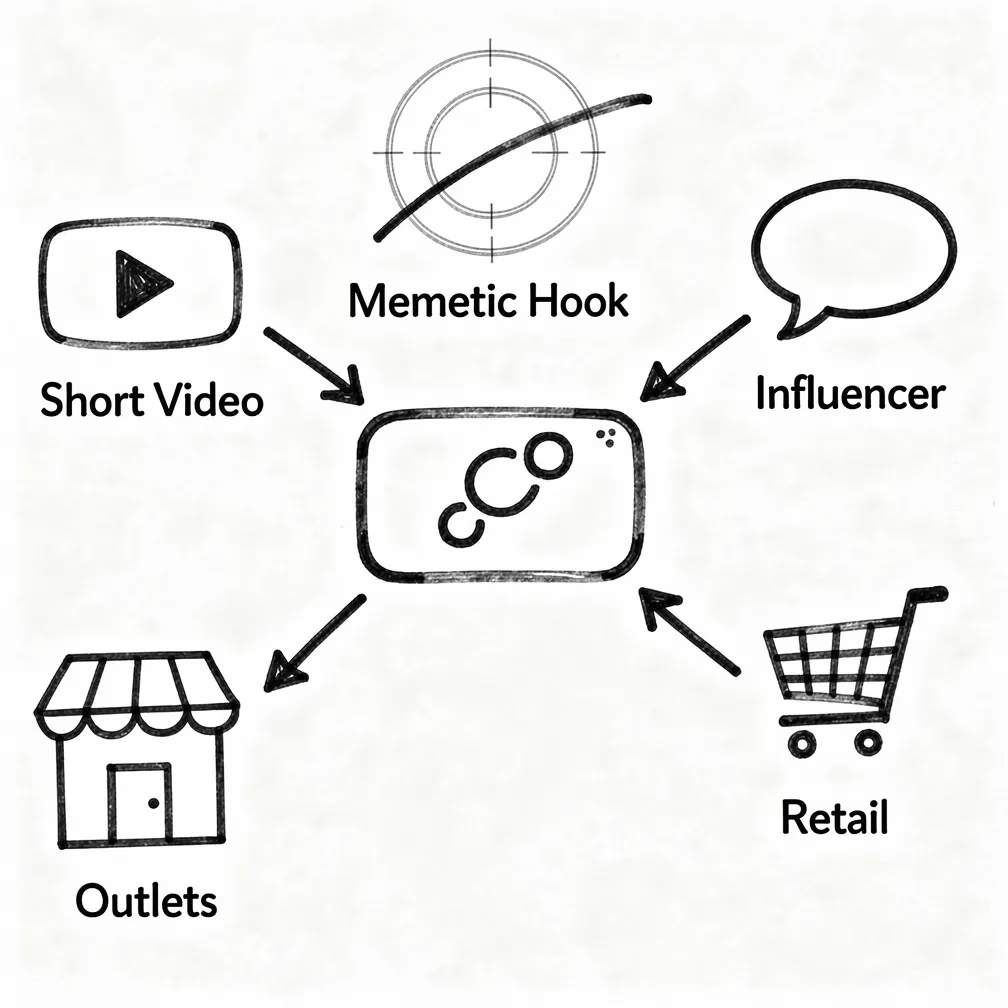
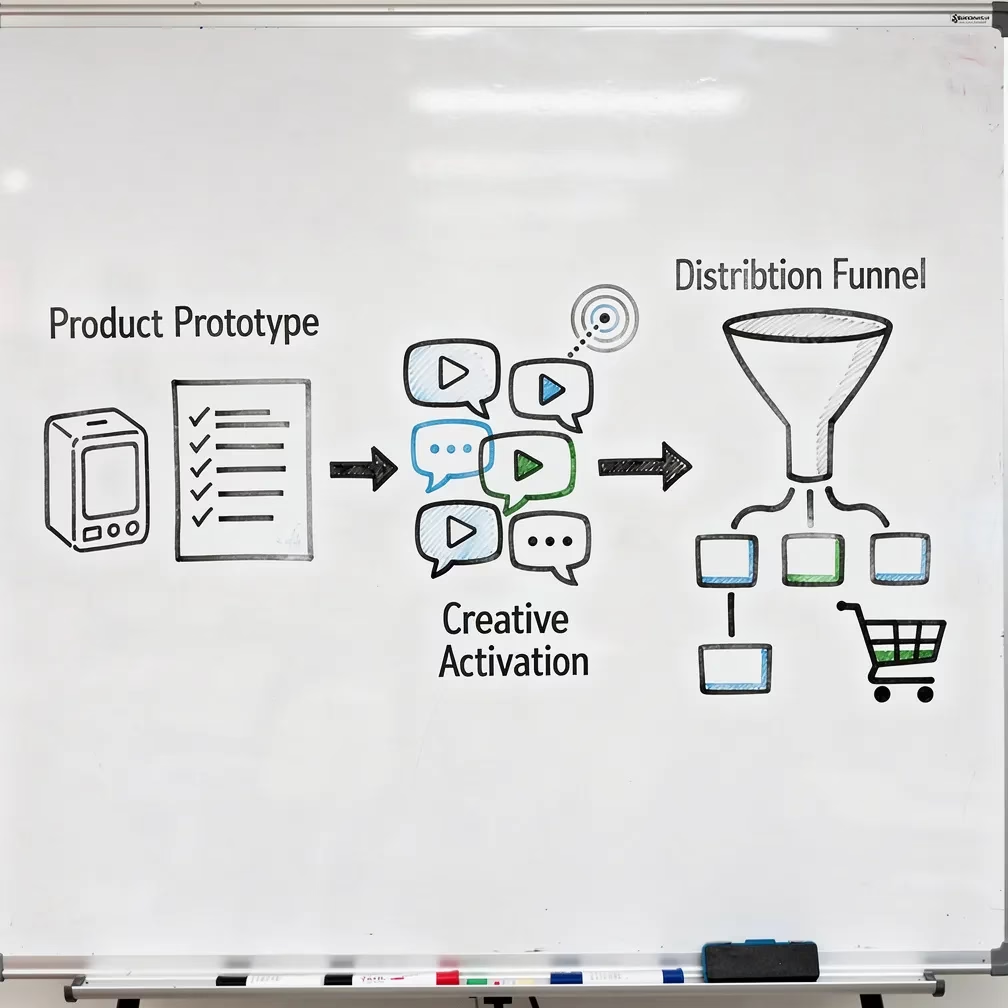
At a strategic level, American Crew combined three explicit moves: product innovation (fast, undetectable color), cultural positioning (a humorous vocabulary — “Graydar”), and channel-first activation (digital, social and influencer). The product-to-message fit is strong: the technical claim (five minutes; natural blend) supports social-friendly creative (short videos, before/after demos, and influencer testimonials). The brand also leaned on distribution reach—availability on ecommerce marketplaces and in 30,000+ professional outlets—to lower purchase friction for consumers who encounter the product via content. From a media planning perspective, this pattern (product claim → short-form demo content → shoppable placements on retailer and marketplace channels) is exactly the stack performance marketers optimize for when measuring view-to-purchase funnels. Campaign US summarized the creative rationale.
Results & Metrics
The publicly disclosed, verifiable metrics available at launch are limited but meaningful: the brand cites that nine out of 10 men (90%) in its testing said no one could tell they had dyed their hair, and American Crew reports distribution in more than 30,000 salons, barbershops and authorized sellers across 50 countries. Those two figures—90% reported undetectability in testing and 30,000+ professional distribution points—are the only numeric metrics released in the public announcements and trade write-ups; the company has not publicly disclosed early performance metrics such as ad engagement rate, view-through conversions, or incremental sales lift tied to the launch. Where performance metrics are not available, say the press coverage, the brand and its agency partners have not released campaign-level KPIs or ROAS figures at the time of publication. StreetInsider and the PR release provide the numeric claims, while trade pieces note that real-world performance metrics are not publicly disclosed.
Why It Worked (or Failed)
The campaign’s strengths are straightforward: the product delivers a single, defensible functional benefit (fast, undetectable color) that maps directly to short-form video creative and influencer proof points—helpful when social algorithms reward demonstrable product results. The cultural framing (“Graydar”) creates a memetic hook that can increase organic sharing and provide a consistent creative thread across platforms. Distribution scale (30,000+ salons and major retailers) reduces friction between discovery and purchase, which is a known multiplier for content-driven campaigns. The primary risk is that most launch communications focus on product claims rather than on measurable consumer outcomes; because campaign engagement and early sales figures were not released publicly, it will be difficult for competitors and industry observers to judge ROI and creative effectiveness without later case studies or measurement disclosures. The brand release emphasizes product and rollout, while trade reporting underscores the absence of performance data.
Key Takeaways for Marketers
Practical lessons from the Fly Under the Graydar launch for performance and creative teams: 1) Align product-specific, demonstrable claims with short-form creative formats—when you can show a reliable, fast result (five-minute application) you make creative production and social proof easier; 2) Use a simple cultural hook to unify creative across channels—the “Graydar” idea is a concise narrative device that influencers and paid creatives can riff on; 3) Prioritize frictionless purchase paths—coupling social creative with marketplace and retail availability (including professional channels) shortens the path from discovery to conversion; 4) Publish measurement early—trade coverage shows that the campaign’s public materials include product claims and distribution metrics but not early engagement, conversion, or sales-impact numbers, which harms industry learning and weakens competitive advantage if competitors can measure and claim ROI; 5) Plan for creator authenticity—because the product benefit hinges on being “undetectable,” creator selection and demonstration fidelity matter more than flashy production.
