

This article contains AI-assisted content and has been reviewed and published by a human editor.
Overview of the Case
On April 9, 2026 De Beers Group announced the expansion of its Desert diamonds platform into the bridal category, with consumer activity rolling out from April 13, 2026; the company framed the work as a broad industry beacon and its largest category marketing investment in more than a decade. The announcement and campaign materials are published on De Beers’ site and summarized in the official PR distribution; see the De Beers announcement and the PR Newswire release for the launch assets and executive statements. The move repurposes Desert diamonds — first unveiled in 2025 — to target bridal purchase moments by showcasing a warmer, desert-inspired palette of natural diamond hues.
What Happened
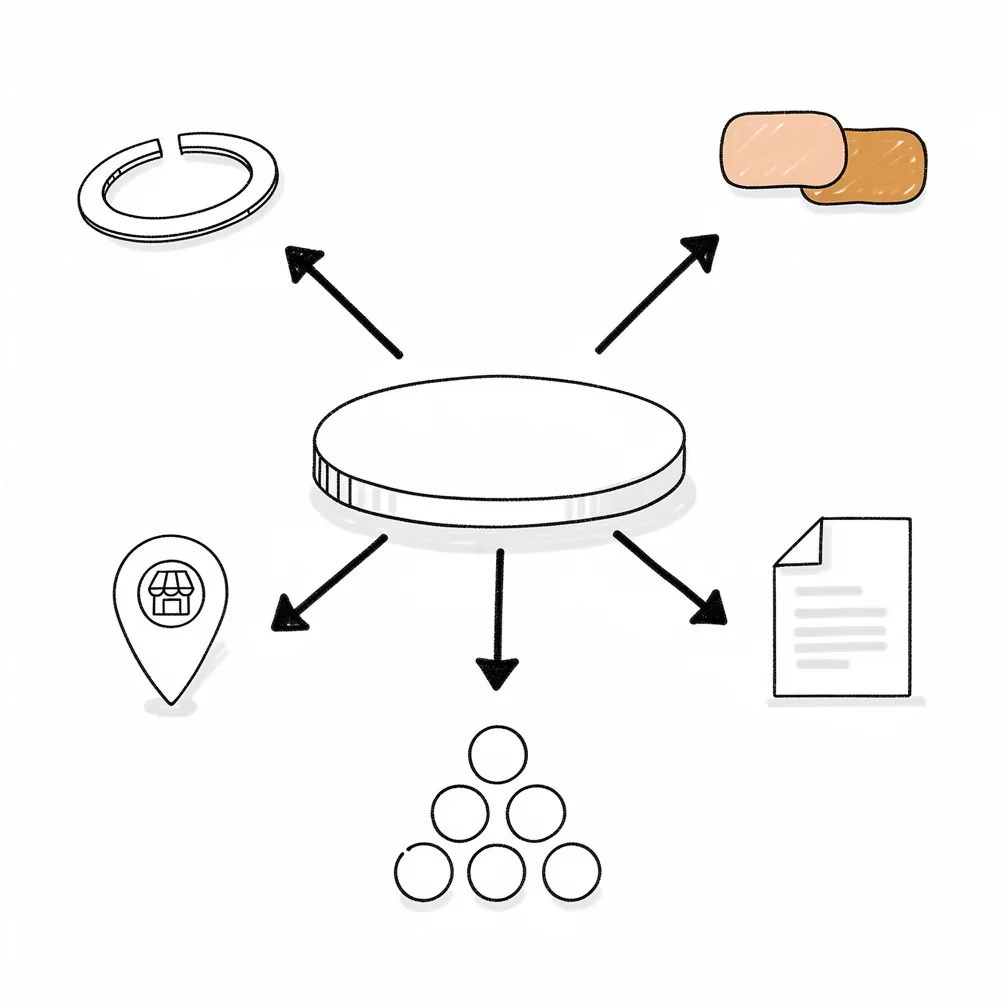
De Beers positioned Desert diamonds Bridal as an industry-wide umbrella program rather than a single-brand product push. The campaign launch included an integrated program across digital, social, outdoor and experiential channels and retailer enablement via store marketing kits and a Promoboxx distribution channel, according to the company announcement. De Beers said it collaborated with over 60 designers to create bridal collections that interpret the new palette, and framed the campaign as a retail demand-builder; independent retailers involved in the first Desert diamonds run reportedly saw uplift in store traffic and bridal enquiries, but precise retail performance figures are not publicly disclosed. The company also emphasized the scale behind the effort — De Beers employs more than 20,000 people globally and supplies roughly a third of the world’s rough diamonds — contextual facts the brand uses to signal category authority and trust.
Strategy Breakdown
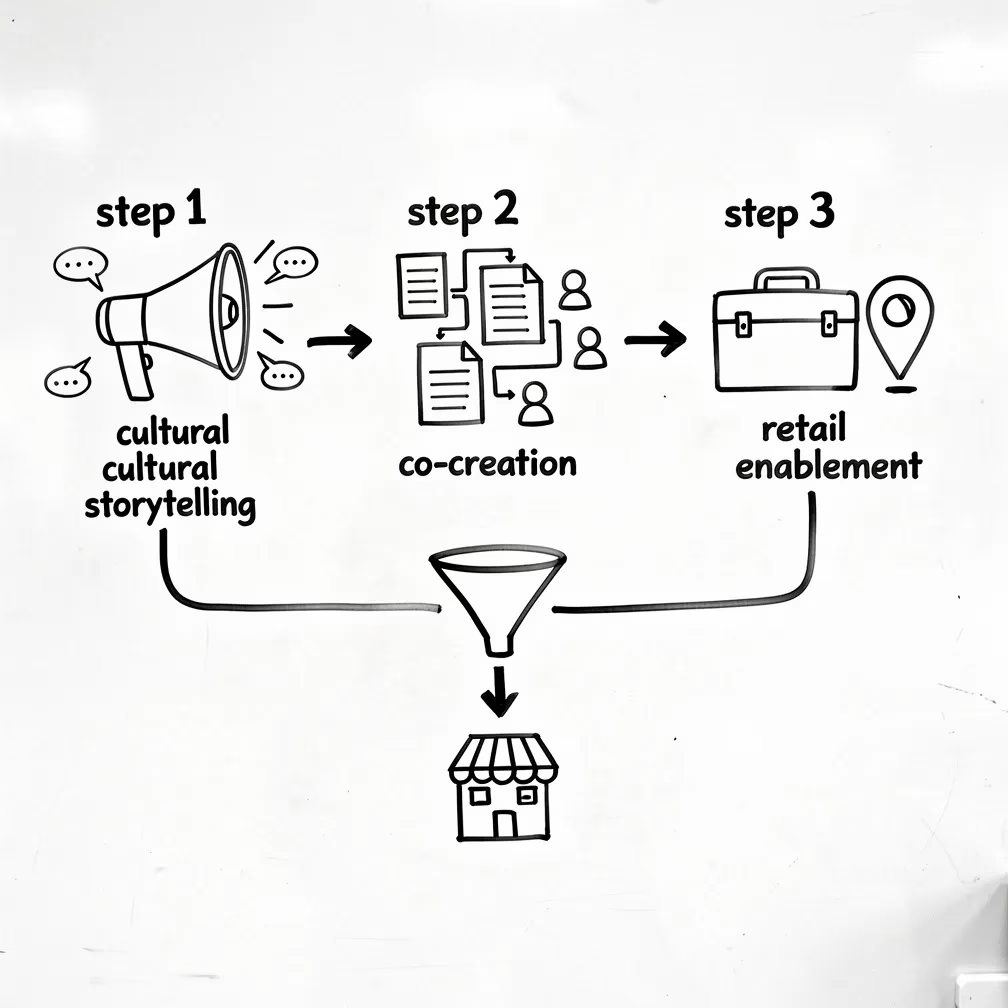
At its core the Desert diamonds Bridal strategy is an explicit category-creation play that blends three strategic levers: (1) cultural storytelling — translating natural diamond origins into a contemporary aesthetic narrative; (2) industry co‑creation — partnering with designers and retailers to convert category messaging into purchasable assortments; and (3) retail enablement — supplying marketing materials and a store locator to simplify discovery and purchase. De Beers amplified credibility through designer partnerships (60+ creators), using shared creative language so independent jewelers could adopt and localize the message. The brand also integrated experiential touchpoints and digital storytelling to move consumers from inspiration to in-store intent, a deliberate funnel approach that prioritizes demand generation over narrow product push tactics.
Results & Metrics
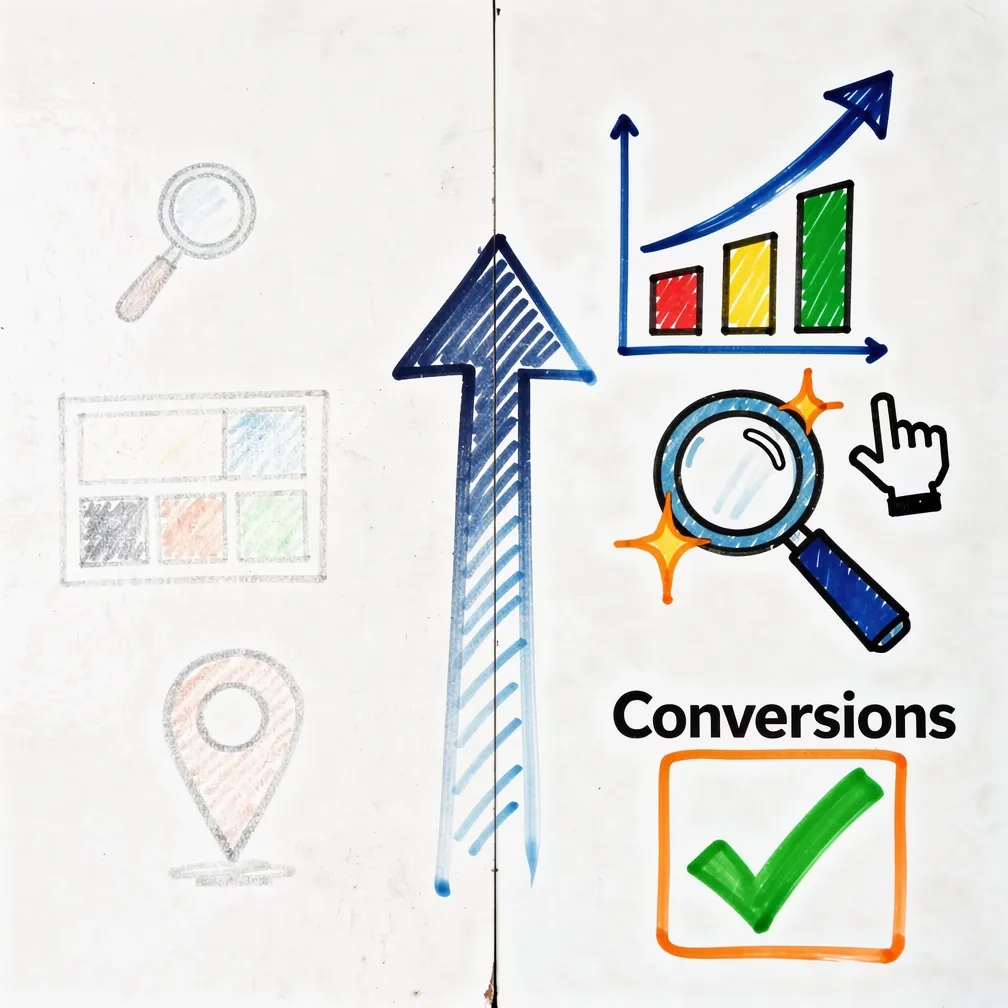
The launch is recent and De Beers reported qualitative retail uplift, but did not publish full performance dashboards at the time of the announcement; the company described increased foot traffic and a rise in bridal enquiries among participating independent retailers, though those numbers are “not publicly disclosed.” For objective, published datapoints tied to the organisation and campaign context: De Beers confirmed collaboration with more than 60 designers on the initiative and publicly notes it employs over 20,000 people and produces around one-third of global rough-diamond supply — metrics that underline capacity and industry reach. Where campaign effectiveness is reported in future updates, marketers should look for top-of-funnel metrics (impressions, ad recall), middle‑funnel signals (search lift for desert/hue-related queries, store-locator clicks) and bottom‑funnel retail KPIs (increase in bridal enquiries, conversion rate on promoted collections) to judge impact accurately.
Why It Worked (or Could Fail)
Why it can work: Desert diamonds leverages cultural momentum (warmer stone tones appearing in celebrity moments and fashion), an industry-wide coalition (designers and retailers), and a clear retail pathway (marketing assets + store listing). That combination reduces friction for independent retailers to participate and amplifies word-of-mouth authenticity that consumers trust for high‑consideration purchases. The risks: category plays require sustained investment and cooperative partners; if brand messaging diverges from retailer assortments or if the marketing spend doesn’t translate into measurable retail demand, the program could generate awareness without sales lift. Additionally, because De Beers framed this as the company’s largest category investment in over a decade, expectations will be high — measurement transparency and retailer reporting will determine whether perception matches commercial outcomes.
Key Takeaways for Marketers
1) Treat category creation as product strategy plus ecosystem design: De Beers built product stories (desert palette) AND enabled supply‑side partners (60+ designers) so the message converts to sellable SKUs. Read the launch materials on De Beers’ site to understand their enablement approach. 2) Design for discoverability: pair cultural storytelling with practical discovery tools (store locators, Promoboxx retail kits) so inspiration becomes a purchase path. 3) Set expectations and measurement early: for category campaigns demand gen metrics (search lift, social share of voice) must be tied to downstream retail KPIs (store traffic, bridal enquiries, conversion rates) — De Beers’ announcement noted uplift at retail but did not publish granular figures, so insist on shared measurement with channel partners. 4) Use partner scale to reduce activation friction: recruiting many designers and retailers spreads content creation workload and helps localize the message. 5) Plan for a long horizon: category shifts rarely convert on a single flight; reserve budget and reporting cadence for multi‑quarter activation and retailer onboarding.
In short, De Beers’ Desert diamonds Bridal extension is a textbook example of a category-building campaign executed through industry coordination and retail enablement. Marketers considering similar plays should plan for multi-stakeholder collaboration, explicit performance measurement tied to retail behavior, and patient investment horizons — the early qualitative retail signals the brand cited are promising, but the business case will ultimately require transparent, shared KPIs between brand and retail partners.
