

What happened
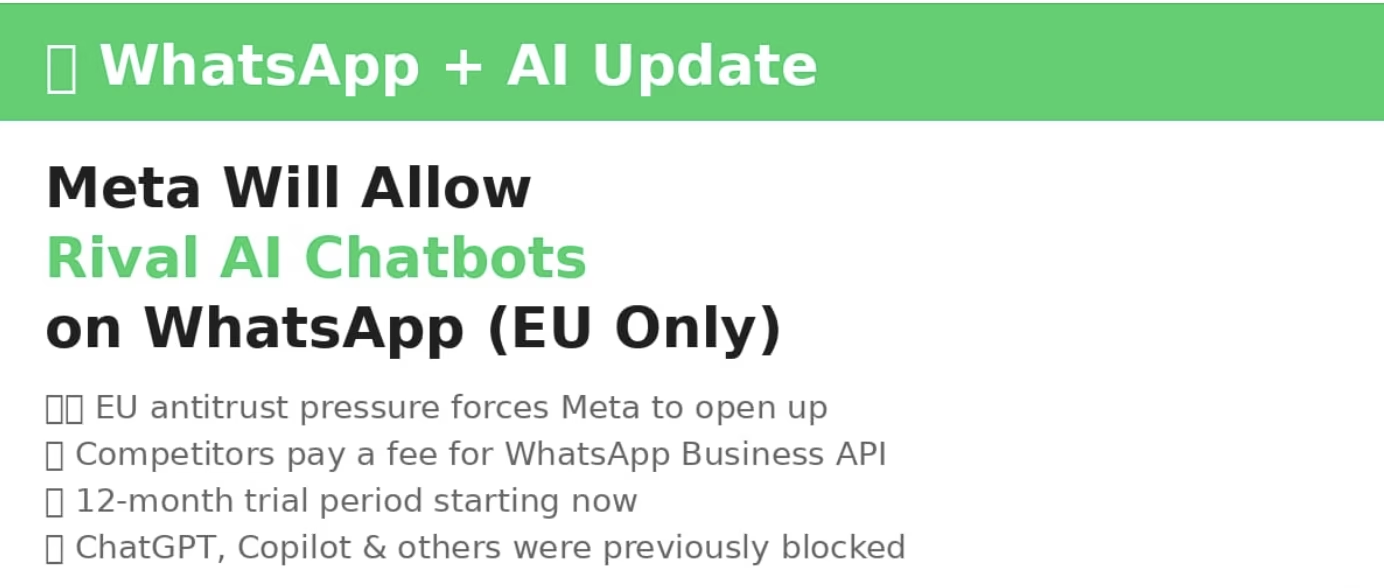
Meta announced it will allow general‑purpose AI chatbots to operate on WhatsApp in Europe via the WhatsApp Business API for the next 12 months, and it will charge third‑party providers a per‑message fee for non‑template messages.
Why this matters for marketing teams
Many brands and agencies use WhatsApp for customer service, conversational commerce and reminders; opening the platform again to external AI assistants reshapes vendor options and competitive dynamics for conversational marketing. Marketers who evaluate AI chat vendors should factor in platform access costs, message‑volume economics and how the integration affects response time and personalization.
Pricing and technical detail
Meta’s announced per‑message fee range for non‑template messages (reported by platform coverage) runs roughly between €0.0490 and €0.1323 depending on the country — a structure that can make sustained, multi‑turn AI conversations expensive unless priced into the service model or offset by conversions.
Regulatory backdrop
The company’s move follows an EU competition inquiry and a formal notification that the European Commission has taken a preliminary view that blocking third‑party AI assistants from WhatsApp risks harming competition — a process that prompted Brussels to signal possible interim measures while the investigation continues.
What stays the same — and what changes
Meta clarified the policy applies to general‑purpose consumer AI assistants; businesses using AI to power templated customer messages or service bots through WhatsApp Business remain able to operate under existing rules. That distinction matters because many marketing and support workflows rely on templated notifications rather than open, multi‑turn AI chats.
Practical guidance for marketers
Start with measurement: run a small pilot that tracks cost per conversation, conversion lift and customer satisfaction when an external chatbot is used versus in‑app or human‑handled alternatives. Consider hybrid designs that keep high‑volume template messages on cheaper routes while routing complex queries to AI assistants. Negotiate fee and volume discounts with vendors where possible, and build message‑volume caps into SLAs.
Privacy, transparency and brand risk
Any external AI assistant on WhatsApp introduces new data‑flow and disclosure considerations. Marketers should confirm how conversation metadata and training‑data usage are handled, update privacy notices if necessary, and ensure clear labeling where AI is generating responses — both for regulatory compliance and to preserve customer trust.
Notable X reaction
The European Commission’s official X account (@eu_competition) highlighted the move and said it had taken a preliminary view that excluding third‑party AI assistants could amount to an abuse of dominance, signalling why Brussels was prepared to pursue urgent remedies. In short: regulators framed this as a competition issue with direct implications for platform access.
Conclusion
For marketing teams the near‑term takeaway is straightforward: the option to run third‑party AI assistants on WhatsApp in Europe is back for now, but with per‑message costs and regulatory scrutiny. Treat integrations as commercial and compliance decisions — pilot first, measure costs against business outcomes, and document data handling and disclosure to protect customer trust.
