

This article contains AI-assisted content and has been reviewed and published by a human editor.
What changed and who it affects
New York has enacted a disclosure requirement that says commercial advertisements containing realistic AI-created people—so-called “synthetic performers”—must include a conspicuous notice when the advertiser knows such a performer appears in the ad, with the rule scheduled to take effect on June 9, 2026. Marketers who run ads that could reach New York audiences need to treat this as a compliance deadline, not a distant policy brief. In mid- to large-market campaigns, failing to disclose can create civil penalties and brand risk. Kilpatrick Townsend’s advisory.

Key rules marketers must know
The statute defines a synthetic performer as a digitally generated asset intended to give the impression of a human performance; when such an asset appears in an advertisement and the advertiser has actual knowledge of it, a conspicuous disclosure is required in the ad itself. This applies across media and applies to ads distributed to New York viewers even if the advertiser is located outside the state. A legal summary of the legislation.
Penalties and important carve-outs
Enforcement carries modest civil fines — commonly reported as $1,000 for a first violation and $5,000 for subsequent violations — but reputational harm and platform enforcement risk can be higher. The law also includes several carve-outs: advertisements for expressive works (films, TV, video games) are exempt when the synthetic performer’s use is consistent with the underlying work; audio-only ads are excluded; and AI used only to translate a human performer is typically outside the rule. Hunton Andrews Kurth’s client alert.
Practical steps marketing teams should take now
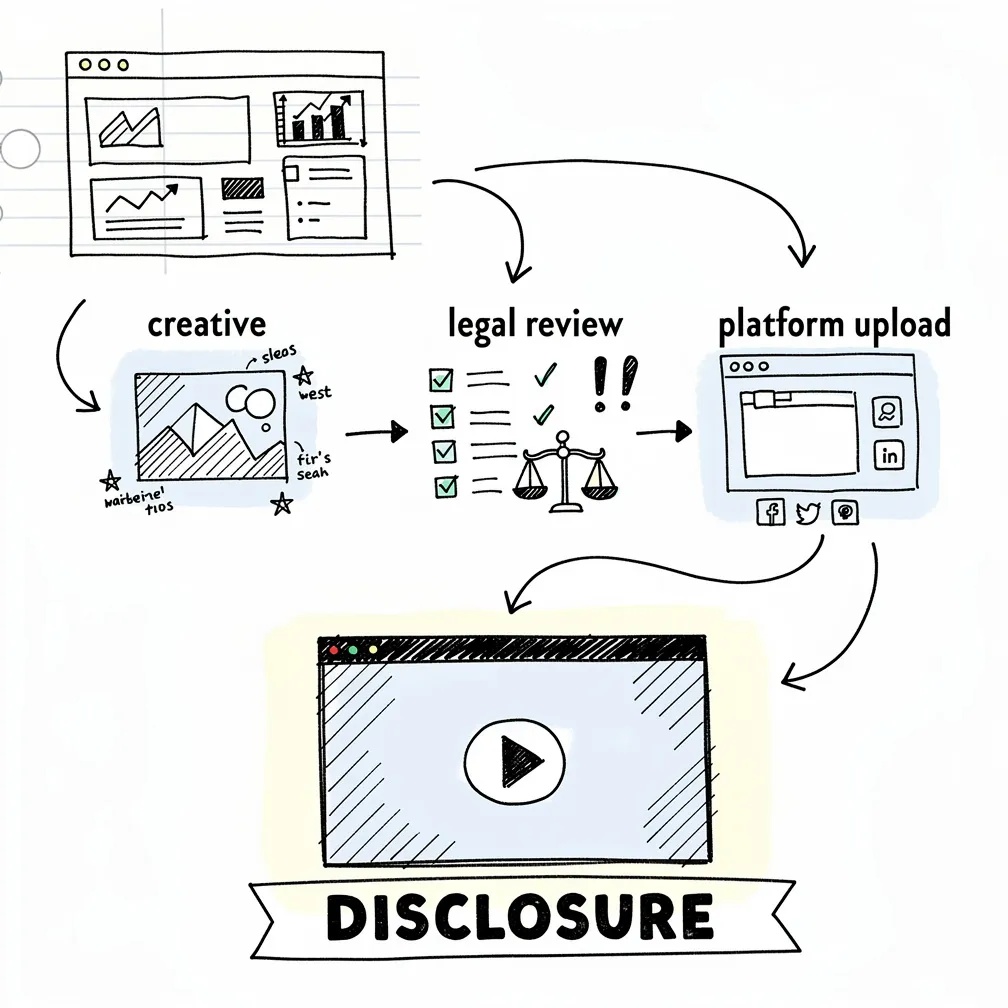
This law’s effective date gives a short runway for action. Recommended next steps include: run a creative inventory to flag any asset that could be a synthetic performer; add mandatory disclosure checkpoints to creative approval workflows; update vendor and influencer contracts to require notice when synthetic assets are used; and prepare visible, context-appropriate on-screen labels or copy for social and programmatic placements. Firms that centralize a single source of truth for asset provenance will reduce the risk of missed disclosures. Compliance guidance and mitigation tips.
Platform and industry context
Major platforms and industry groups have been moving toward provenance and disclosure for AI-generated content; brands should map platform-level labeling tools (for example, the native AI tags some platforms provide) to the statutory requirement so that disclosures are both visible and persistent across placements. Where platform labels exist, make sure your creative pipeline propagates that metadata into the final ad files or upload flows used by your media teams.
A notable public voice on X
The Screen Actors Guild‑American Federation of Television and Radio Artists (SAG‑AFTRA) has been vocal about synthetic performers and has publicly argued that synthetic actors risk undermining real performers’ livelihoods; the union’s public statement urges caution and highlights contractual and consent issues that brands and agencies should consider before deploying synthetic talent. See the union’s statement for context and industry reaction. SAG‑AFTRA’s statement on synthetic performers.
How to design compliant disclosures (brief guide)
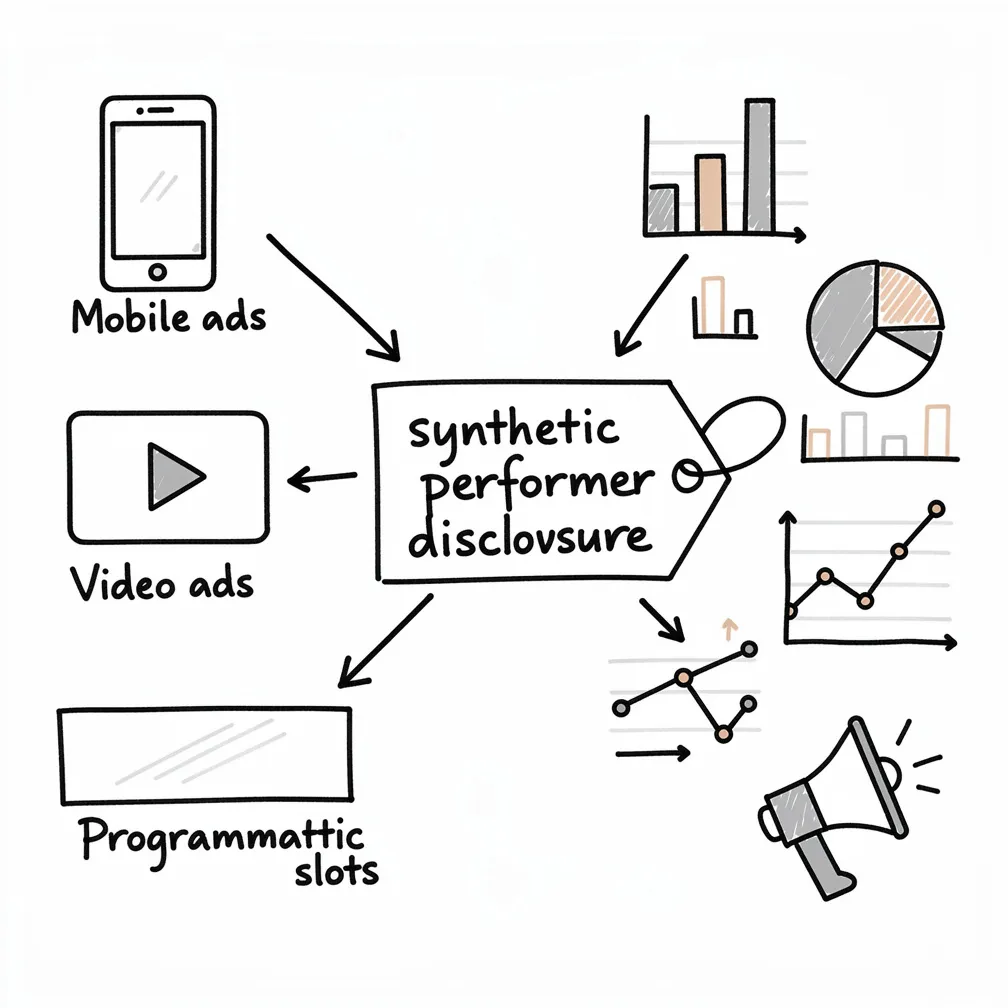
Keep disclosures clear, prominent, and adapted to format: on-screen supertitles for video, pinned text or overlays for social short-form, and pre-roll copy for streaming placements. Avoid hidden legalese — the point is consumer notice. Test creative variants to ensure labels remain visible in mobile view and after platform cropping or aspect-ratio changes. Also document decisions and maintain a traceable audit trail showing when and why a synthetic asset was used.
Conclusion
New York’s synthetic performer disclosure law moves disclosure from guidance to a statutory requirement with a June 9, 2026 effective date. Marketing, legal, and production teams should treat this as a near-term operational project: inventory assets, train reviewers, update contracts, and bake clear disclosure into creative templates to avoid fines and protect brand trust.
Further reading
For legal details and examples, consult the law firm advisories and the union statement cited above as you build a practical compliance plan.
