This article contains AI-assisted content and has been reviewed and published by a human editor.
Criteo becomes the first ad-tech partner in ChatGPT’s ad pilot
On March 2, 2026 Criteo confirmed it has integrated its commerce advertising platform with OpenAI’s ChatGPT advertising pilot for the Free and Go tiers in the United States, aiming to make conversational ad inventory available to its existing advertisers.

Why this matters for digital advertising
The integration is more than a distribution tweak: Criteo says it connects roughly 17,000 advertisers and more than $4 billion in annual media spend to ChatGPT inventory, and reports early data showing users referred from large language model (LLM) surfaces convert at about 1.5× other referral channels. This signals that conversational surfaces can drive measurable commerce outcomes for retailers and brands.

Price, scale and pilot limits: what marketers should expect
OpenAI’s controlled ad pilot launched with premium pricing and participation thresholds — industry reporting cites a $60 CPM and selective minimum commitments for direct buys — which initially limited direct access to larger advertisers. Criteo’s role is explicitly framed as a way to onboard a wider set of advertisers into that inventory through familiar buying workflows.
Implications for personalization and recommendation systems
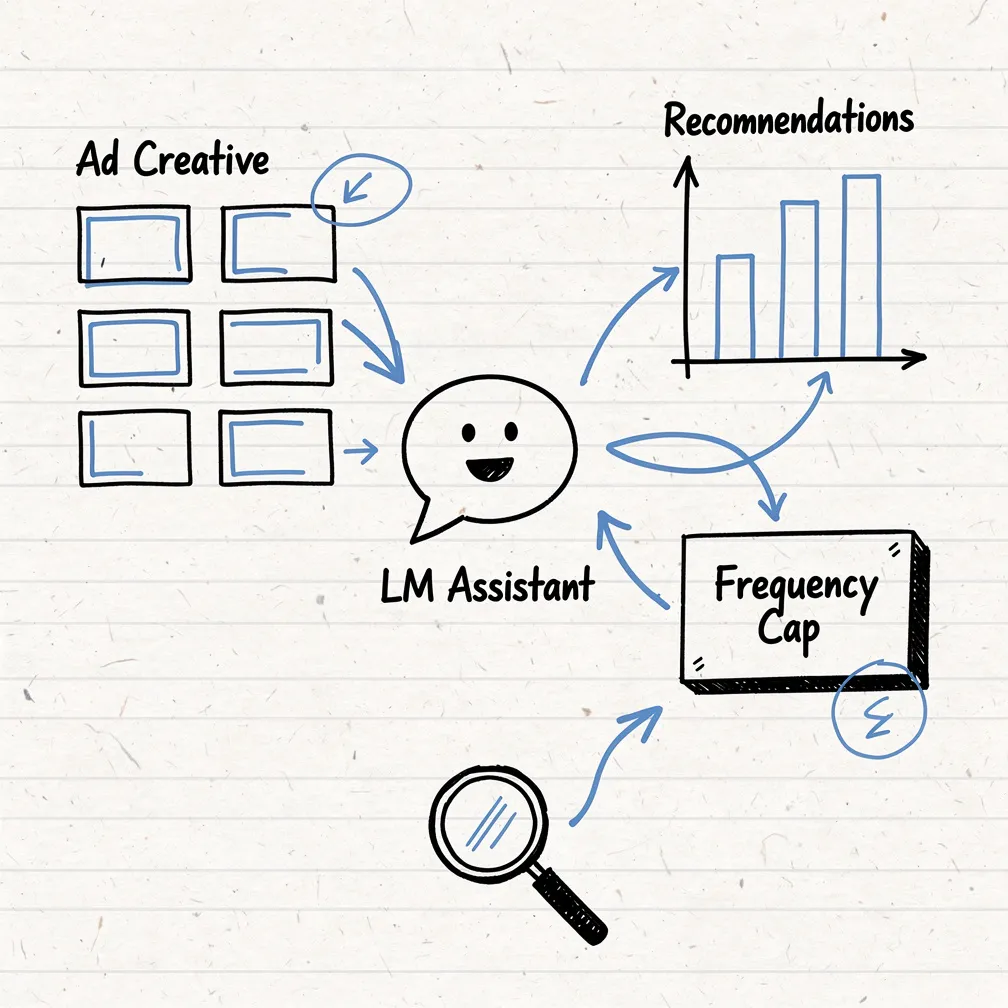
Because ChatGPT surfaces conversational discovery rather than traditional page-based browsing, ads and recommendations there rely heavily on contextual signals, commerce telemetry, and real-time intent inferred from a user’s query. Marketers must rethink creative, product feeds, and recommendation logic to match the ephemeral, dialog-driven user intent that LLM assistants reveal. Early reporting suggests platforms and partners are testing how to map commerce signals into this new surface.
Privacy, transparency and brand-safety considerations
OpenAI states ads will be clearly disclosed and that ad content will not influence the assistant’s answers, while advertisers will initially receive aggregated performance metrics rather than full attribution detail. That separation helps preserve user trust, but it also creates measurement and verification gaps for marketers used to granular attribution and deterministic identifiers.
What should marketing teams do this week?
Start with experiments you can measure: align product feeds, prioritize clear creative that answers a user’s likely follow-up questions, and set strict frequency and relevance controls. Also update privacy and disclosure language with legal and privacy teams so ad experiences remain compliant and clearly labeled. Expect reporting to be coarser than programmatic display at first; plan coordinated tests across channels to estimate incremental lift.
Industry reaction on X
Notable commentary came from X: industry reporter Seth Ulinski (@Seth_Ulinski) noted that Criteo’s integration effectively plugs existing commerce demand into ChatGPT and called attention to early conversion signals and the potential for retail-focused performance ads to scale on conversational surfaces.
Bottom line: an access point, not a guaranteed channel
Criteo’s entry into the ChatGPT ad pilot marks a clear step toward making conversational inventory programmatically accessible, but it does not eliminate the pilot’s early limitations—premium pricing, selective reporting, and evolving measurement standards. For marketers, the near-term opportunity is to run disciplined tests that measure lift and user experience while protecting brand safety and consumer trust.
Conclusion: The Criteo–ChatGPT integration opens conversational ad inventory to more advertisers and highlights the need for new measurement, creative, and privacy guardrails; thoughtful pilots now will determine whether ChatGPT becomes a reliable performance surface or remains a high-cost specialty channel.