

This article contains AI-assisted content and has been reviewed and published by a human editor.
What changed last week
During the first week of April 2026 Google completed the wider rollout of its AI Max capabilities for Search campaigns, making the feature set broadly available outside the initial beta cohort. Several industry write-ups and roundups described the change as a de facto platform-level shift that lets Google’s AI layer dynamically generate and tailor ad text using advertiser-supplied guidelines; see the summary in Seafoam Media’s April 2026 marketing roundup and the original Ads & Commerce letter from Google leadership for the strategic context in Google’s Ads & Commerce post.

Why this matters to search advertisers
AI Max is not a separate campaign type — it layers AI-driven controls on top of existing Search campaigns and can expand delivery beyond keywords into broader intent signals. Practically, the rollout means your ad copy may be generated or heavily rewritten by Google’s models unless you set clear text guidelines; that changes creative governance, QA workflows, and how you measure incremental lift, as reported in several ad-industry updates. For a concise rundown of the April changes and the rollout implications, see Groas.ai’s April summary.
Immediate technical checks (do these this week)
1) Audit text-guidelines and brand controls: If you rely on precise phrasing, update your campaign-level text guidelines now to control tone, required terms, and disallowed language. Google’s guidance and industry summaries explain how advertisers can pass text constraints to the generator; review the official product guidance in Google’s Ads & Commerce letter before you push global changes.
2) Measurement and tagging: AI Max can alter query distribution and landing-page selection, so verify Consent Mode v2, Enhanced Conversions, and server-side tagging are working end-to-end. Several agencies flagged measurement drift during the early rollout; align your analytics and experiment setups with the recommendations in the April industry brief at Seafoam Media to avoid blind spots.
Creative and testing changes
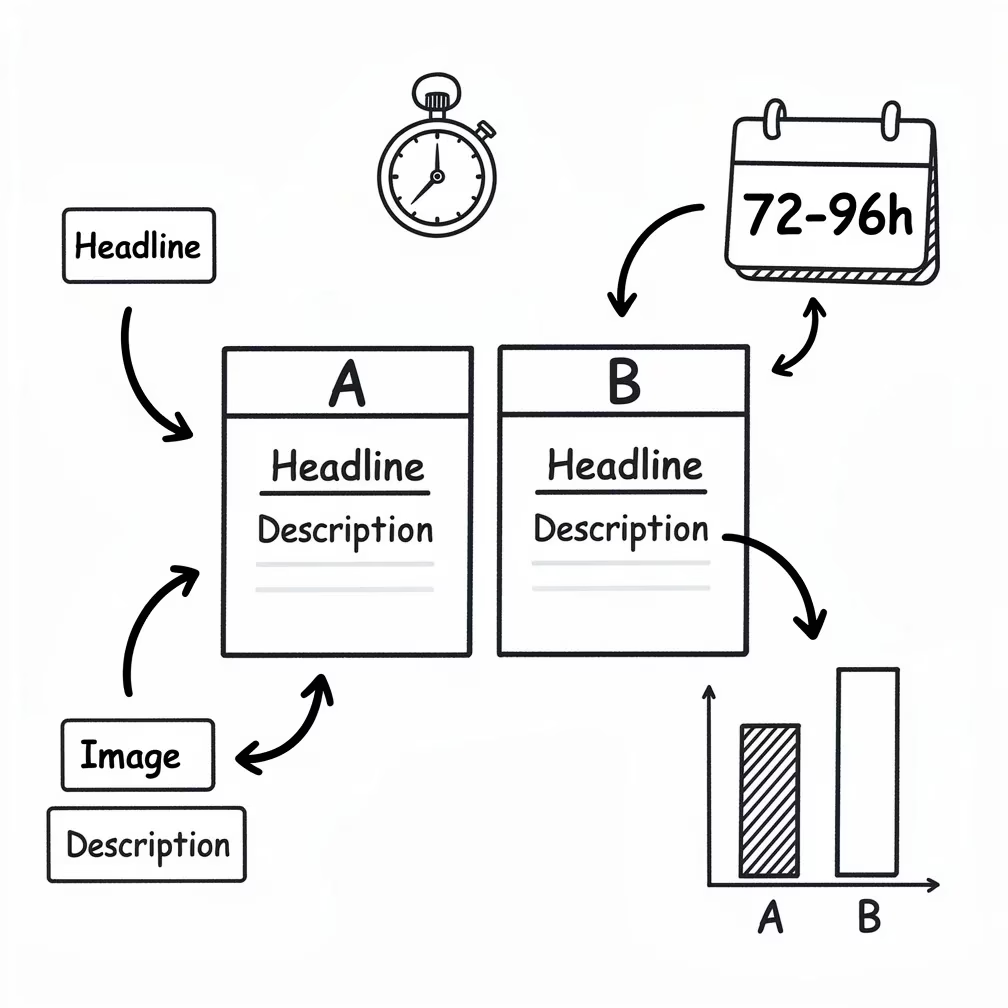
Google also made asset-level testing and more granular creative signals more visible inside Performance Max and Search workflows during the same release window. That means you can now run A/B-style tests on individual headlines and descriptions with clearer performance signaling; adjust your creative inventory and test cadence accordingly. For practical examples and recommended test designs, see the reporting in Groas.ai’s April post and the auditsocials explainer on AI controls in Google Ads at AuditSocials.
Budgeting, bidding and placements — what to change
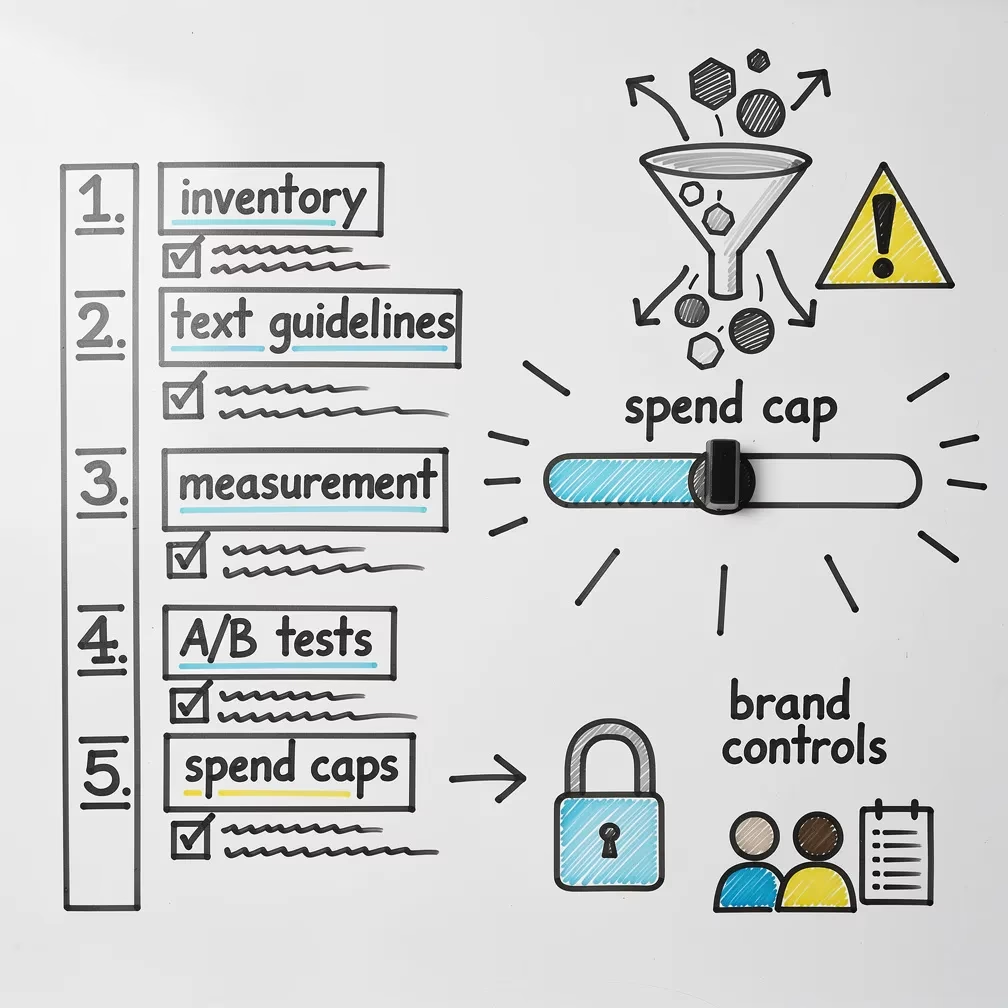
Because AI Max broadens where your ads can be matched, expect shifts in query volume and CPC dispersion. Immediate actions: tighten negative keyword lists where brand safety or irrelevant intent matters, set tighter CPA/ROAS guardrails, and consider short-window portfolio experiments (72–96 hours) to detect abnormal spending or quality issues. Industry reporting from the April rollouts shows some accounts experienced a short-term increase in irrelevant impressions until text-guideline maturity was reached; implement conservative spend limits on newly converted campaigns while you evaluate performance (see Seafoam Media).
Operational checklist for agencies and in-house teams
Use this checklist as a one-week sprint plan:
- Inventory high-risk campaigns (sensitive verticals, legal/regulatory, branded bids).
- Apply or tighten text-guidelines at campaign level.
- Validate consent, measurement, and offline conversion pipelines.
- Run controlled A/B tests against AI Max-enabled baselines for 7–14 days.
- Set automated spend safety rules (daily caps, CPA overrides) for first 30 days.
- Document creative variants and keep a changelog accessible to client/stakeholders.
Industry posts summarizing the April rollout provide helpful templates and examples you can adapt; see the practical guides at Groas.ai and AuditSocials.
Bottom line
Google’s expansion of AI Max for Search in April 2026 is a platform-level change that requires both technical housekeeping and new creative governance. Treat the next 30 days as an observation and control window: lock in measurement, apply text guidelines, run accelerated tests, and add hard spend limits while your models and creatives stabilise. The quick fixes listed above are the minimum required to protect performance and brand integrity during this transition; for strategic planning, align your Q2 roadmap to include iterative creative playbooks and measurement audits informed by the rollout notes from Google and independent industry analysis.
