This article contains AI-assisted content and has been reviewed and published by a human editor.
Quick summary — why this matters
In mid‑March 2026 the industry conversation around agentic commerce intensified as Google’s Universal Commerce Protocol (UCP), Business Agent and Direct Offers continued rolling out in Merchant Center and AI shopping surfaces — a change that lets AI assistants (like Gemini) discover products, surface exclusive offers and, in eligible cases, complete checkout on behalf of users. Search Engine Roundtable.
What UCP actually does
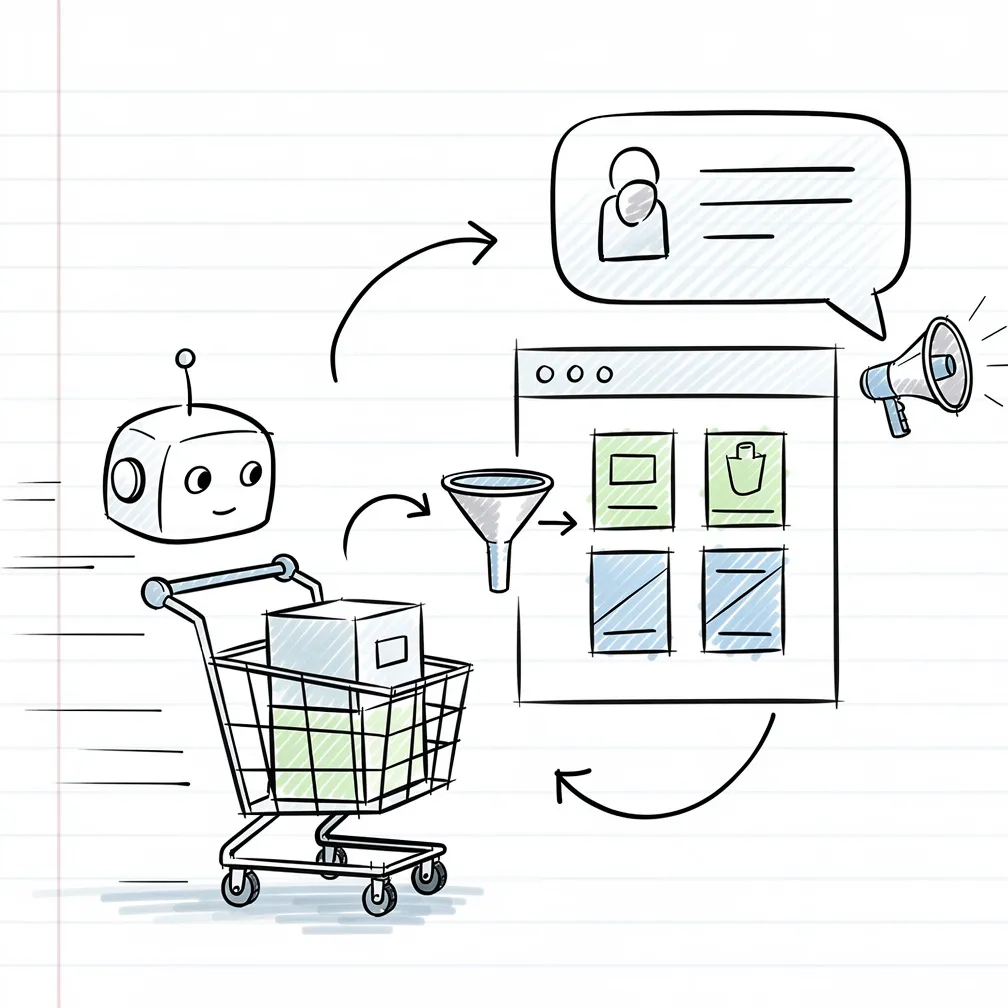
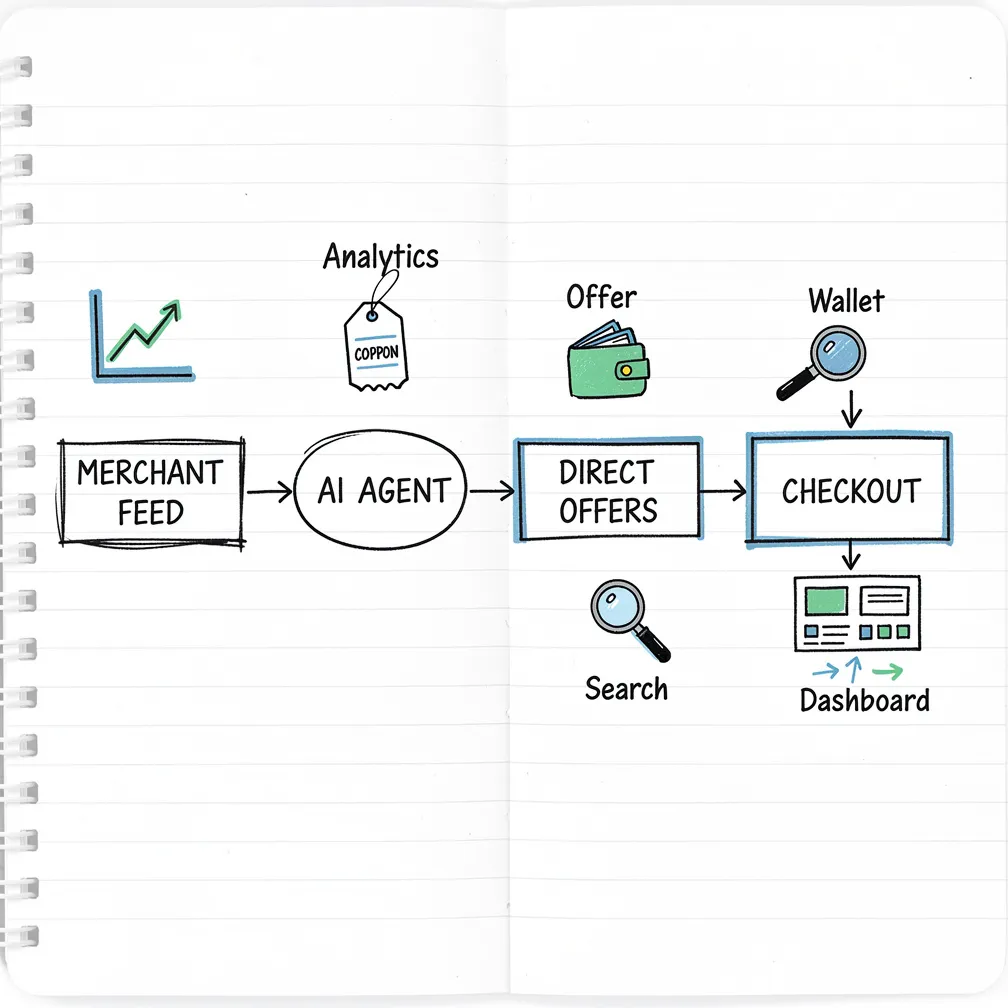
UCP is an open protocol designed to standardize how AI agents interact with merchant catalogs, carts and payment systems so a conversation with an AI can end in a purchase without a traditional website checkout. Early partners and documentation position it as an industry standard that integrates product feeds, offers and checkout plumbing. Explainers published in March 2026 walk through the branded agent, agentic checkout and Product Quality-style signals that will determine discoverability.
Why marketers should care now
UCP shifts a portion of commerce from your website to AI surfaces. That means the usual funnel (ad → landing page → cart → checkout) can be shortened to ad/AI conversation → AI checkout. The implications: product feed quality, promo codes and agent responses become first‑class conversion signals, and brands that aren’t prepared risk lost visibility or lower conversion share. Practical notes from Google Ads monitoring explain early setup complexities and how activation currently uses supplemental Merchant Center attributes.
What a notable X voice is saying
Sundar Pichai (@sundarpichai) framed UCP at NRF as an industry collaboration to make shopping more seamless and endorsed participation from payment and retail partners; the message from leadership is clear: Google sees agentic commerce as a strategic priority and is inviting merchants to integrate. Coverage of his announcement captures that emphasis.
Immediate actions for marketing and ecommerce teams
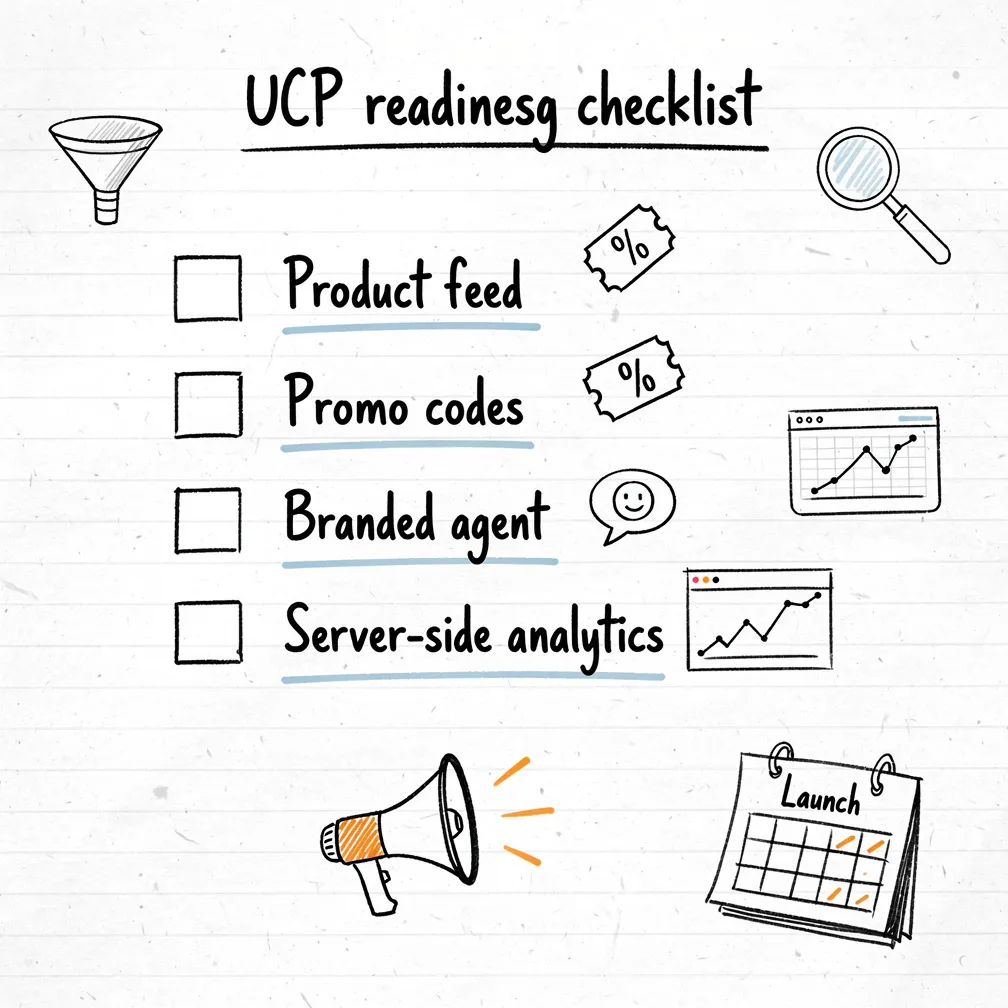
- Audit and enrich Merchant Center feeds now — include return policy, shipping windows, variant‑level data and clear promotional coupon codes so agents can rely on accurate metadata.
- Register and test Business Agent (branded agent) if eligible: customize answers, product FAQs and escalation paths so the agent reflects brand voice and compliance constraints. Guides explain eligibility and practical setup.
- Create a Direct Offers strategy: map which SKUs can tolerate discounts, prepare unique promo codes for Merchant Center, and guard margin with strict rules for offer eligibility.
- Instrument measurement: expect some sales to happen without page visits — ensure server‑side events, UTM-like identifiers, and product‑level reporting are configured to attribute AI‑driven conversions.
Risks, governance and ethical considerations
Agentic checkout raises privacy, disintermediation and liability questions. If an AI agent makes a purchase using stored wallet data, merchants remain the seller of record and must own returns, tax and warranty liability. Prepare clear audit logs, human‑fallback flows for complex purchases, and legal review of agent scripts to prevent misleading or non‑compliant claims. Recent industry coverage flags these exact risks as reasons merchants should control feed accuracy and offer rules. Technical writeups note setup nuances that affect merchant control.
How to test without overcommitting
Start small: pick a narrow product set (low complexity SKUs), upload controlled promo codes, enable Business Agent in a staging environment and monitor conversions for one week. Run A/B tests comparing agentic offers vs. traditional funnels and watch changes in average order value, return rates and customer service escalations. Use strict message exclusions and brand guidelines in agent scripts to prevent brand‑unsafe language.
Practical checklist for the next 30 days
- Complete a Merchant Center feed quality audit and add missing attributes.
- Reserve test promo codes and configure Direct Offers pilot parameters.
- Set up server‑side attribution and alerts for agentic checkouts.
- Train customer service on agentic checkout exceptions and refund workflows.
Conclusion
UCP and Google’s branded agent + Direct Offers represent a concrete step toward AI‑first commerce where agents can close the sale. Marketers who prioritize feed accuracy, controlled offers and governance testing in the coming weeks will preserve margin and brand trust — while those who delay may cede share to better‑prepared competitors. Stay pragmatic: pilot quickly, measure carefully, and keep humans in the loop for edge cases.